


Aydınlatma metni yükleniyor…
Short answer: multilingual website cost cannot be calculated by multiplying the Turkish website price by the number of languages. Budget depends on translatable content units, market localization, unique templates, linked locale URLs, forms and integrations, imagery, data entry, editorial approval, technical QA and the ongoing update model.
A small bilingual corporate site and a five-language platform containing thousands of products, documents and country-specific offers cannot use the same “price per language” rule. A useful proposal exposes the unit, quantity, owner, dependency and acceptance criterion for every work package.
Which Work Belongs in Multilingual Website Cost?
Beyond core design and development, consider content inventory, source-language cleanup, translation, localization, linguistic and subject review, data entry, locale navigation, URL relationships, form routing, email templates, search and filters, image adaptation, measurement, testing, training and maintenance.
Not every project needs every item at the same depth. A two-language corporate site may not need product migration. A technical catalogue can contain short visible copy while still requiring thousands of fields, units and document relationships.
The Kumsal Workflow-Based Multilingual Cost Matrix
This original matrix is not a price list. It makes nine work packages visible so proposals can be compared against the same scope:
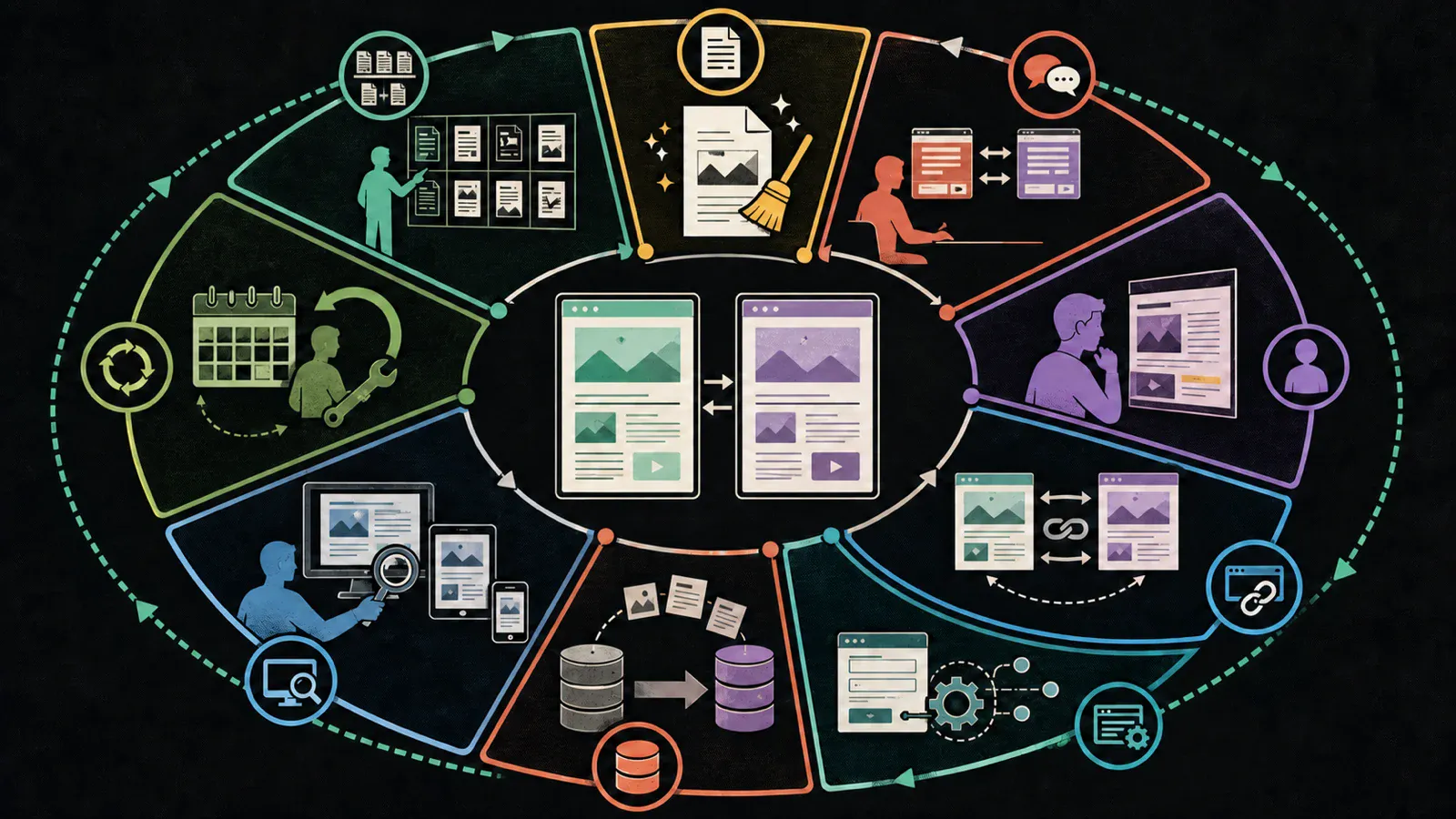
- Content inventory: How many pages, components, products, forms, documents, emails and media units exist?
- Source preparation: Is source copy current, consistent and ready to translate?
- Translation and localization: Will copy only change language, or will market terminology, units, dates, currency and calls to action change?
- Review and approval: Who owns linguistic, brand, technical and legal approval?
- Technical locale structure: How will URLs, paired records, canonicals, hreflang, sitemaps and switching work?
- Functional adaptation: Do form recipients, CRM fields, payments, search, filters, files or emails differ by language or country?
- Entry and migration: Will content be entered manually, imported or obtained from a source system?
- Quality assurance: Which linguistic, layout, mobile, accessibility, link, form and SEO tasks are included?
- Ongoing operations: How do new content and source changes move to other locales?
Record “unit × quantity × workflow” for each row. Instead of “translate 120 pages”, specify page type, approximate volume, repetition, specialist risk, editing, entry and approval. This reveals which responsibility a lower total excludes.
How Should the Content Inventory Be Built?
A URL list is a starting point, not the complete inventory. Pages include shared service cards, navigation, footer, legal copy, form fields, error messages, email notifications and downloads. In a catalogue, attributes and variants may matter more than page count.
Useful columns include source URL or record, content type, source owner, target locales, word or field volume, repetition, risk/specialism, image text, translation method, editor, approver, destination URL and update frequency. Use the multilingual website planning guide for the wider architecture.
Why Is Source-Language Quality a Cost Driver?
When incomplete, obsolete or contradictory source copy goes directly to translation, defects multiply across locales. Confirm product names, service boundaries, terminology, abbreviations, figures and legal wording first. Delayed source approval blocks translation, design and data entry.
The proposal should name the owner of source writing and cleanup. “Content supplied by client” does not define format, deadline, approval, missing fields or change control. Treat preparation as a separate package so the schedule reflects the actual dependency.
What Is the Cost Difference Between Translation and Localization?
Translation transfers meaning. Localization considers terminology, tone, number/date/time formats, currency and units, address and phone structures, examples, legal requirements and calls to action for the destination market. Not every element needs to change; mark the ones that do.
High-risk technical, contractual, health or financial material may need qualified subject review. Neither an agency nor an automated tool should invent certifications, outcomes, legal interpretations or product capabilities that the client has not verified. Record the approver and final version.
How Do Machine Translation and Translation Memory Affect Budget?
Machine translation can create a first draft, translation memory can reuse previously approved segments, and a termbase can improve consistency. These tools do not accept publication responsibility. Raw output, human-edited output and subject-approved output are different deliverables.
Ask which tool is used, what data is sent to it, which privacy terms apply, how repetitions are counted and how much human review is included. A repetition discount is meaningful only when the source segment is truly identical and its earlier approval remains valid.
Why Do Templates and Design Affect Locale Cost?
Locales can share a design system, but headings, buttons, menus and tables expand differently. Card height, line breaks, mobile navigation, field labels and empty states must be tested with real translations. A right-to-left locale also changes direction, icon, motion and component behaviour.
Text embedded in imagery creates separate files and approvals. Keep text in HTML where practical. When localized imagery is necessary, add source ownership, licensing, target dimensions, crop, alt text and update ownership to the inventory.
How Do URLs, Hreflang and Language Switching Enter Scope?
Google Search Central’s guidance for multilingual sites recommends separate URLs for language versions and allowing users to choose rather than relying only on language-based automatic redirects. Its localized-version documentation explains how hreflang identifies language or regional alternatives. Neither is an indexing or ranking guarantee.
For every translated record, test the destination URL, self-canonical, reciprocal locale relationship, visible switch target and sitemap state. When a translation is absent, should the visitor reach the home page, a useful category in that language or remain on the current page? The decision affects both experience and implementation.
The W3C guide to declaring language in HTML explains the document’s default lang attribute and marking passages written in another language. This can support browser and assistive-technology behaviour and is separate from a visible language menu.
How Should Forms, Emails and Integrations Be Estimated?
A form includes labels, validation and error messages, consent, success state, automated email, recipient team, CRM mapping, spam controls and personal-data flow. Test them per locale. Country-specific products, branches or sales teams may introduce routing logic.
For payment, shipping, maps, search, filters and accounts, verify the third-party provider’s language, currency, character, address and country support. Show external licence and usage fees separately from implementation.
How Should Entry and Migration Be Planned?
Content may be entered manually, imported from a table, obtained through an API or transformed from an existing system. Cost follows source cleanliness, field mapping, media relationships, duplicates, missing data, legacy URLs and rollback—not record count alone.
Run a representative pilot across different page types and two locales. Confirm that content connects to the right record, locale, category, media and URL. A successful pilot does not guarantee every record; it reveals defect classes and a more realistic throughput.
What Should Multilingual QA Cover?
- Linguistic editing and subject review where required
- Desktop and mobile layout using real content
- Locale consistency across navigation, breadcrumbs, categories, search and filters
- Forms, emails, CRM routing and failure scenarios
- Correct two-way switching between paired pages
- Canonicals, hreflang, sitemaps, robots rules and redirects
- HTML language declaration, keyboard and baseline accessibility
- Images, downloads, licences and localized alternative text
- Approval evidence, release date and rollback plan
“Language added” is not an acceptance criterion. Test representative service, product, article, form and error pages through real tasks.
How Is Ongoing Cost Calculated?
A multilingual site is not a file that is translated once. Whenever the source locale gains a page, product change, campaign, legal update or form field, define which locales receive it, by when and with whose approval. Translation backlog needs an explicit state, owner and publication rule.
Annual budget can include editorial capacity, translation, entry, technical maintenance, licences, integration use, QA and measurement as well as hosting and domains. Use the three-year website cost guide to place these items across project years.
How Should Agency Proposals Be Compared?
- Which pages, components, products, forms, documents and media are included?
- Who writes and cleans the source content?
- What are the translation method, editor, specialist and brand approval?
- How are words, pages, records, components and templates counted?
- Are URLs, linked locale records, hreflang, canonicals and sitemaps included?
- Are forms, emails, CRM and third-party adaptations included?
- What are the boundaries for entry, migration pilots and defect correction?
- Which mobile, accessibility, linguistic and technical QA samples are tested?
- How are new content, revisions and maintenance handled?
- Are external tools, translation, licences and usage costs separate?
Conclusion
Multilingual website cost follows the workflow each content item passes through—from source preparation to translation and approval, technical pairing, testing and continued updates. The Workflow-Based Multilingual Cost Matrix turns hidden responsibilities into a comparable scope.
To scope your content inventory, locale architecture and sustainable management model together, talk to Kumsal Agency’s web design team. Sharing target markets, representative page types, product/data volumes and approval owners will make the initial proposal more comparable.